
Seated women in Wayang or 'Art Deco' style


In the 1930s-1940s, as the wayang style flourished, sculptors increasingly produced representations of everyday life scenes to better satisfy the tastes of foreign visitors. Among sculptures of this type, seated female figures are undoubtedly the most sought-after by collectors today. On online sales platforms, some easily reach high prices, not to say unreasonable in certain cases.
For period and style are not everything. The 1930s were certainly the time when, concurrent with the creation of the Pita Maha association, great names emerged who would bring the wayang style to a high degree of sophistication, such as I Ketut Rodja, I Made Gerembuang, and Ida Bagus Njana. While the seated female figures they carved in this style are among the most beautiful, they are generally beyond the reach of the ordinary collector. Many have found their place in museums or prestigious private collections. Apart from these exceptional pieces, sculptures of this type produced during the 1930s-1940s are of variable quality. A good number are based on models intended for sale abroad, offered in catalogues, and reproduced with greater or lesser skill and care.

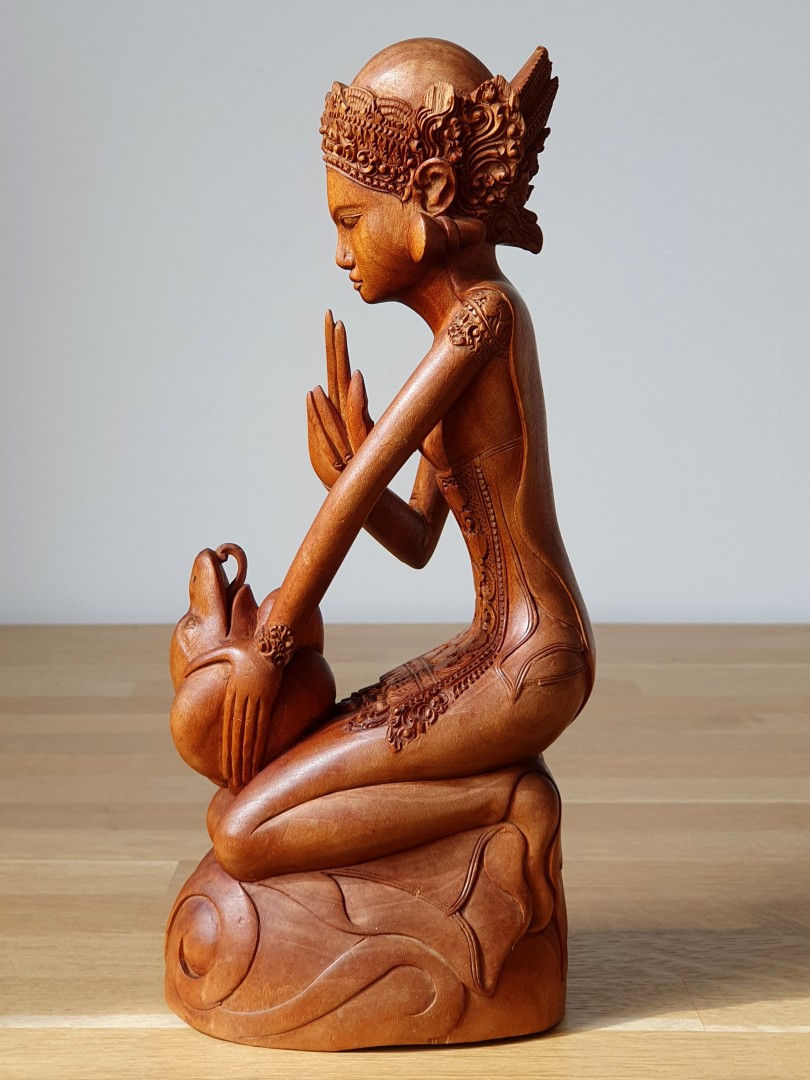
Female figures in the wayang style are distinguished by their hair. It is always smooth, in the manner of a sort of sculptural helmet more or less embellished, depending on the complexity of the hairstyle, with bulb-shaped reliefs. Body proportions are unrealistic, and elongation dominates in the treatment of forms. The depiction of fabrics provides an opportunity for decorative interplay between curves and broken lines.


This seated female figure is one of the finest pieces in my collection. The pensive expression, the fluidity of lines, and the harmony of the posture are particularly striking. Though stylized, the forms of the raised leg demonstrate careful observation of anatomy: the edge of the tibia and the curve of the calf are accurately defined, while the position of the foot seems to adapt naturally to the relief of the base. In the rendering of the hands, the carver has managed to suggest the phalanges with great economy of means, through a subtle modulation of the notches separating the fingers.
Surprisingly, the inscriptions beneath the base reveal that this is a variation of a model distributed through catalogues. While the sculpture broadly follows the pose of the photographed model, it nevertheless stands out through a markedly superior refinement in the treatment of forms, quite exceptional for a work created within a logic of mass production.
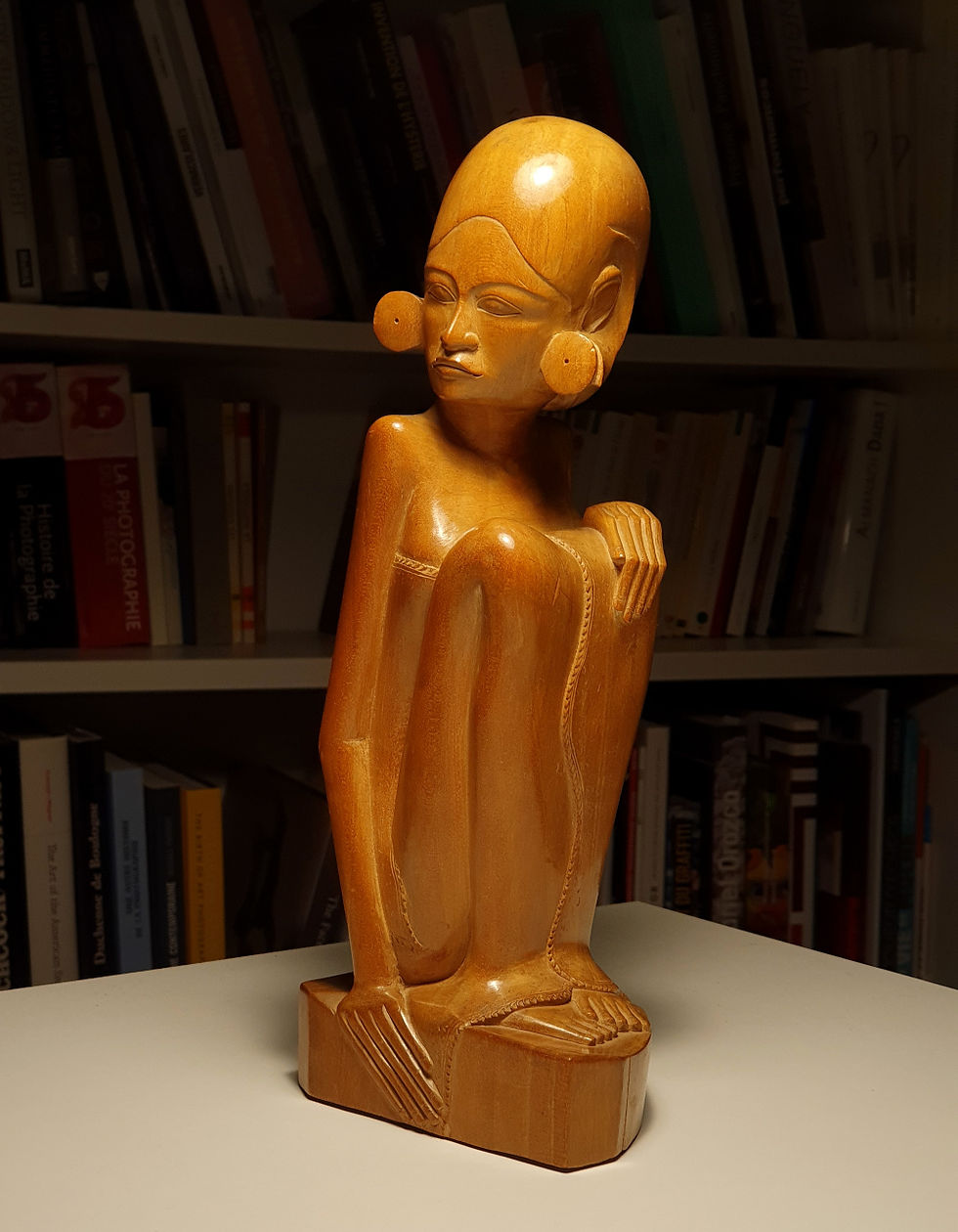
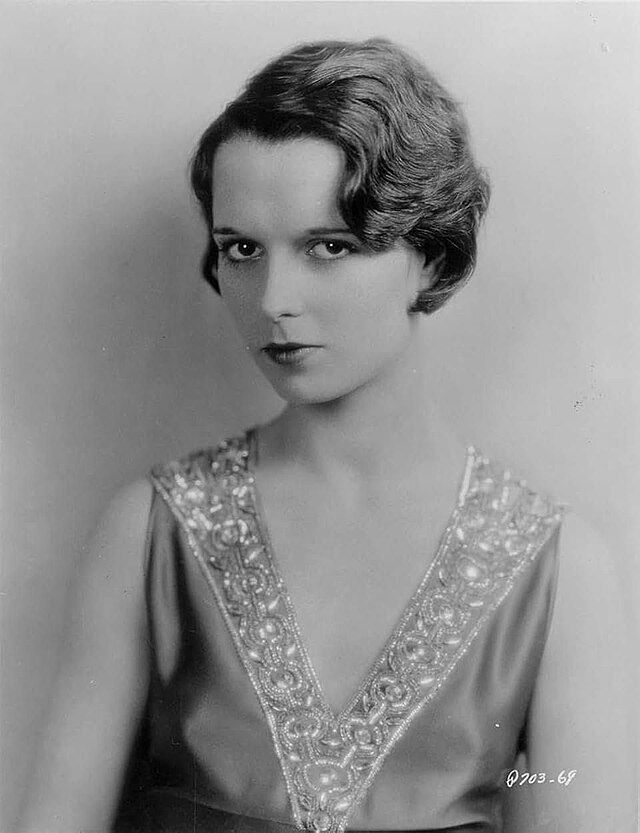
Here is another seated female figure in the wayang style. I've nicknamed her "la garçonne" because of her short hairstyle and androgynous air, which recall the emancipated, fashion-forward women known by that name in 1920s France. It's also a nod to the Art Deco movement, with which some emphasize similarities to this sculptural style—a movement of which la garçonne remains an emblematic figure.
The execution is less complex than the previous one, with a compact silhouette from which no limb extends. The lines of the fabric and the rendering of the hands are also simpler. However, the blonde tone of the wood, the delicacy of the features contrasting with the large subengs, and the gaze marked by sustained attention lend it genuine elegance.


I like both carvings, Oliver, but the first the most! The subeng (ear studs) are also an important detail in determining the quality of this type of wood carving. The looser they are from the head, the better the carving. BTW: great picture of Louise Brooks. She was famous for her bob haircut!